
Last updated November 22, 2026
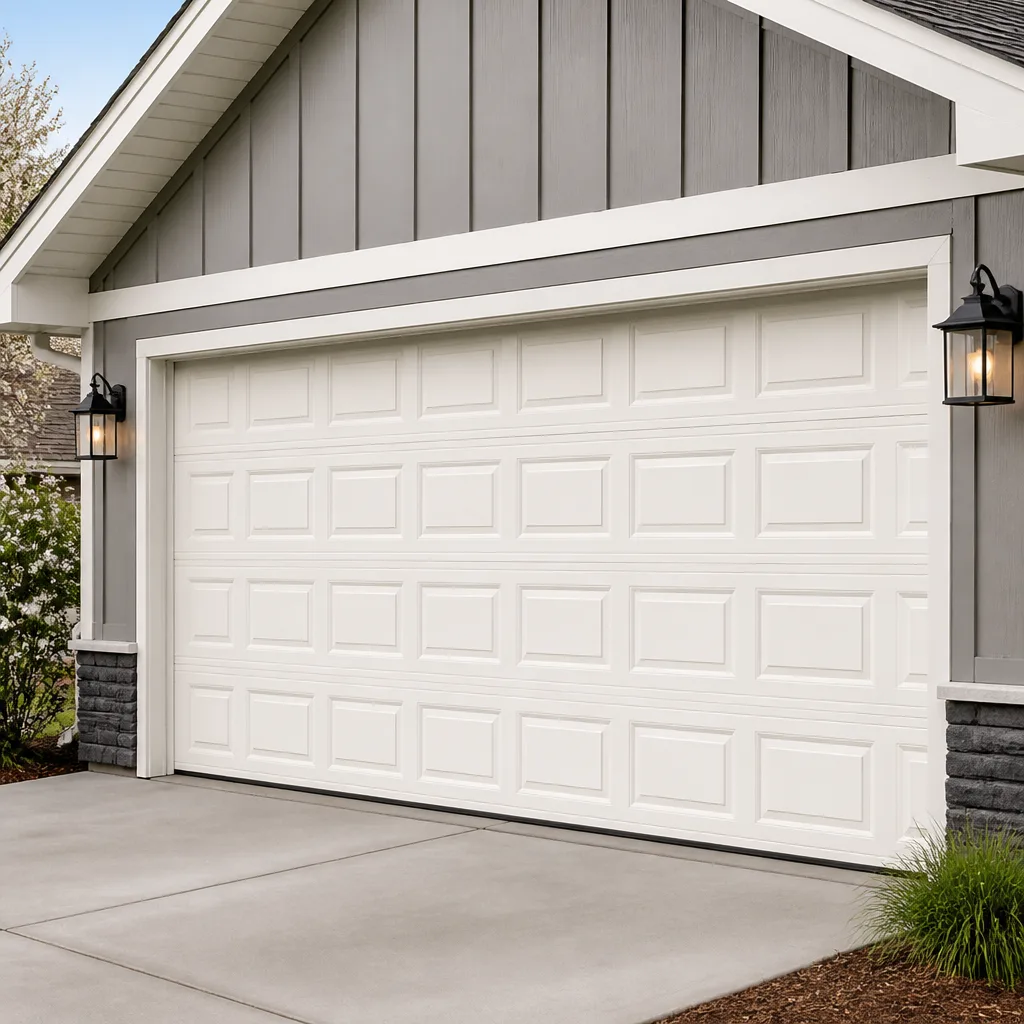 Raised-panel steel
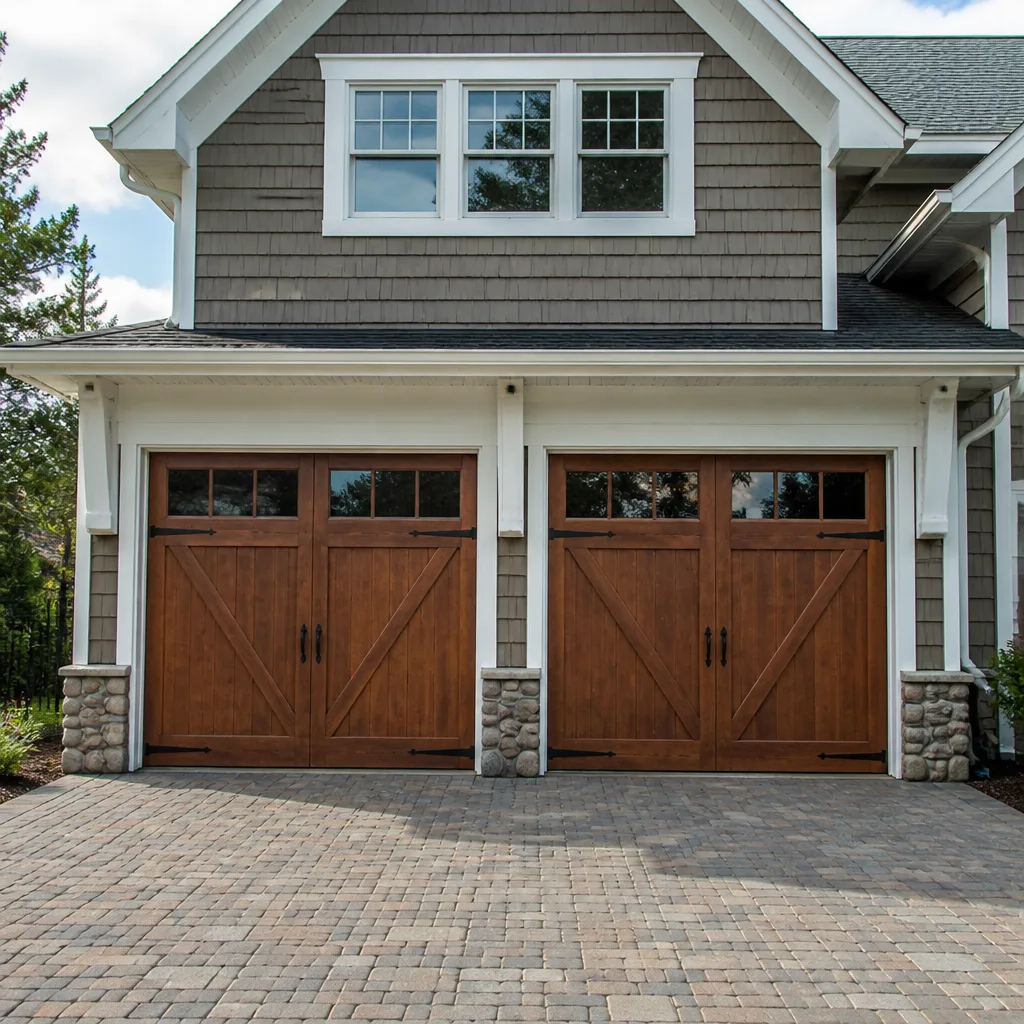 Carriage house
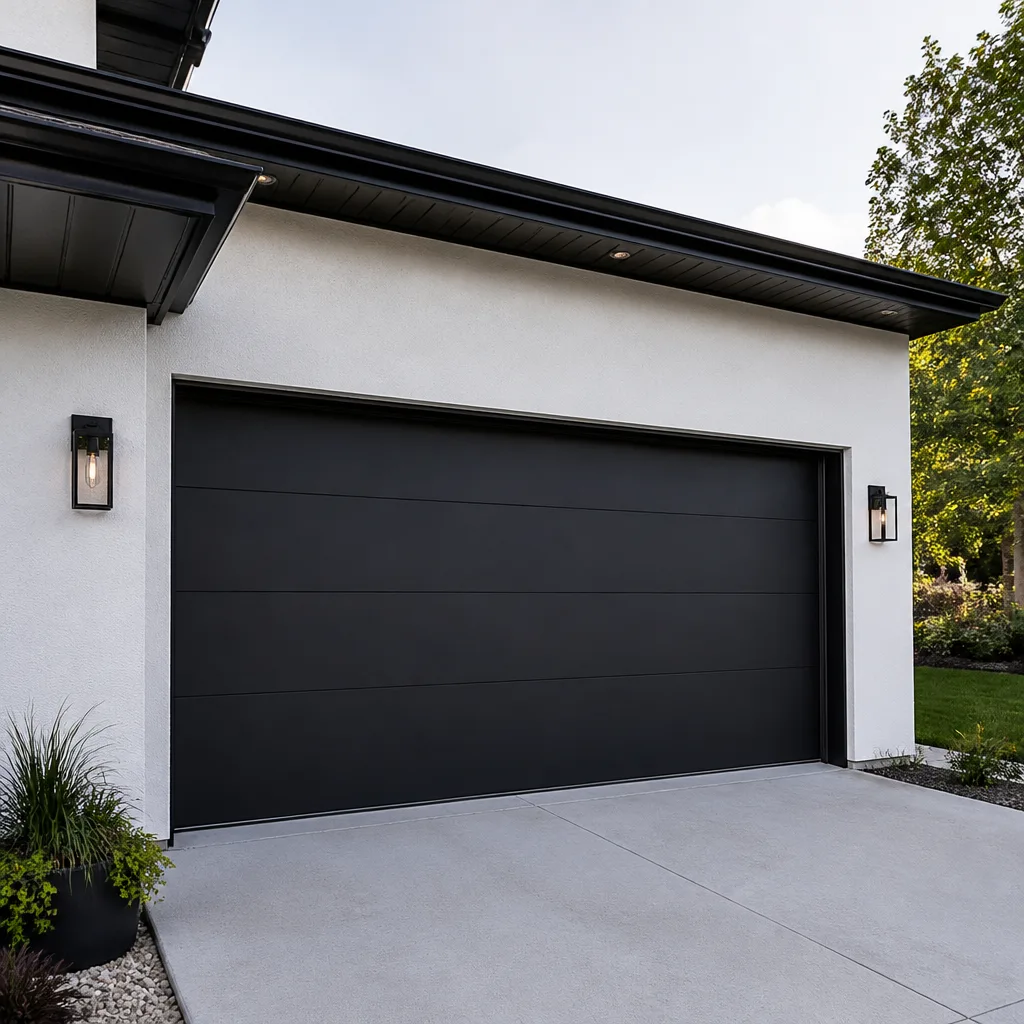 Modern flush
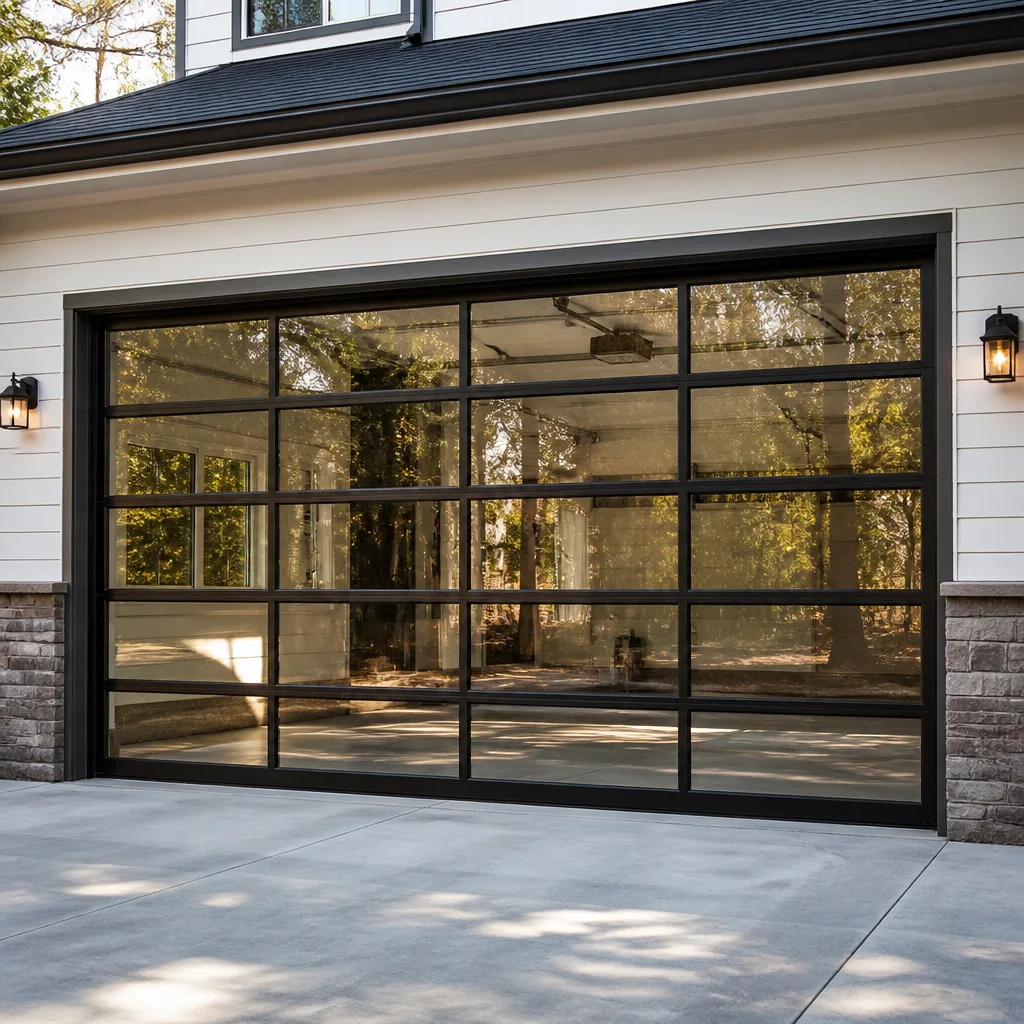 Full-view glass
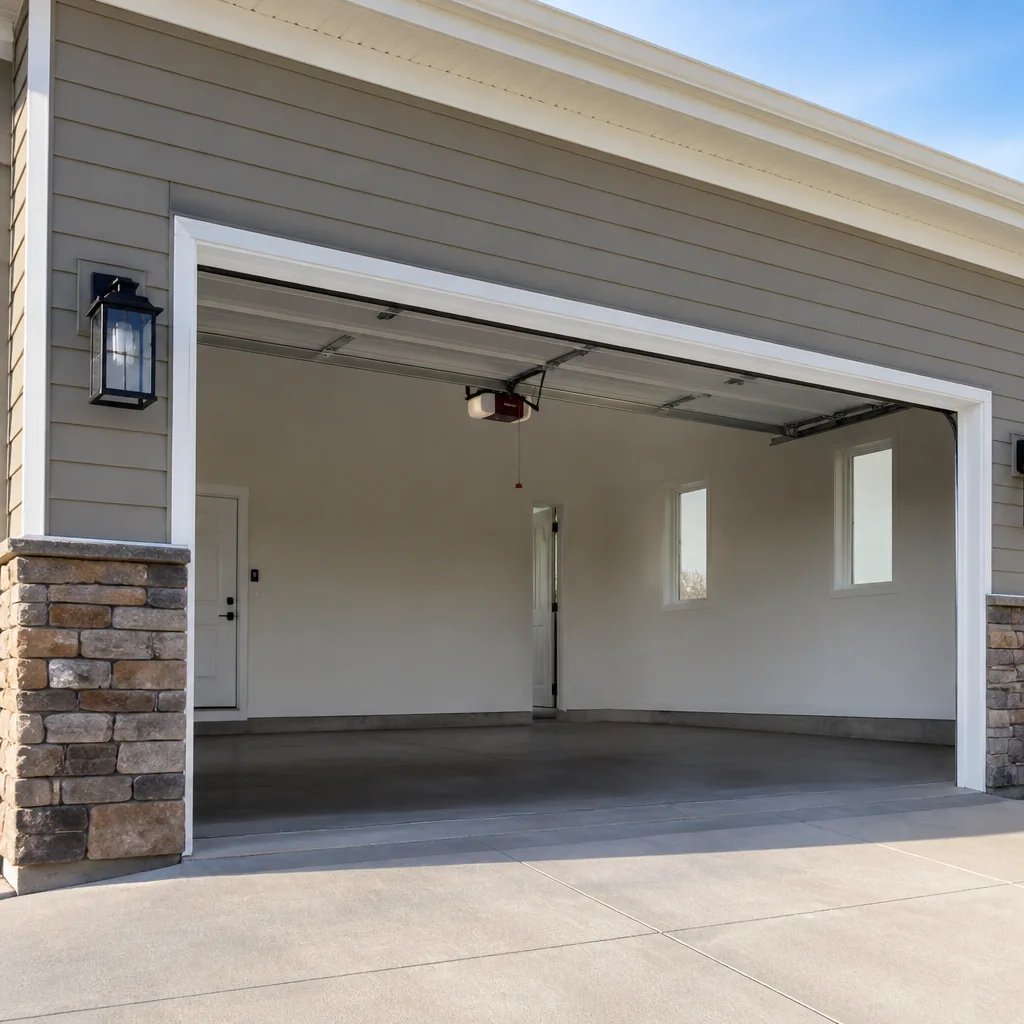 LiftMaster openers
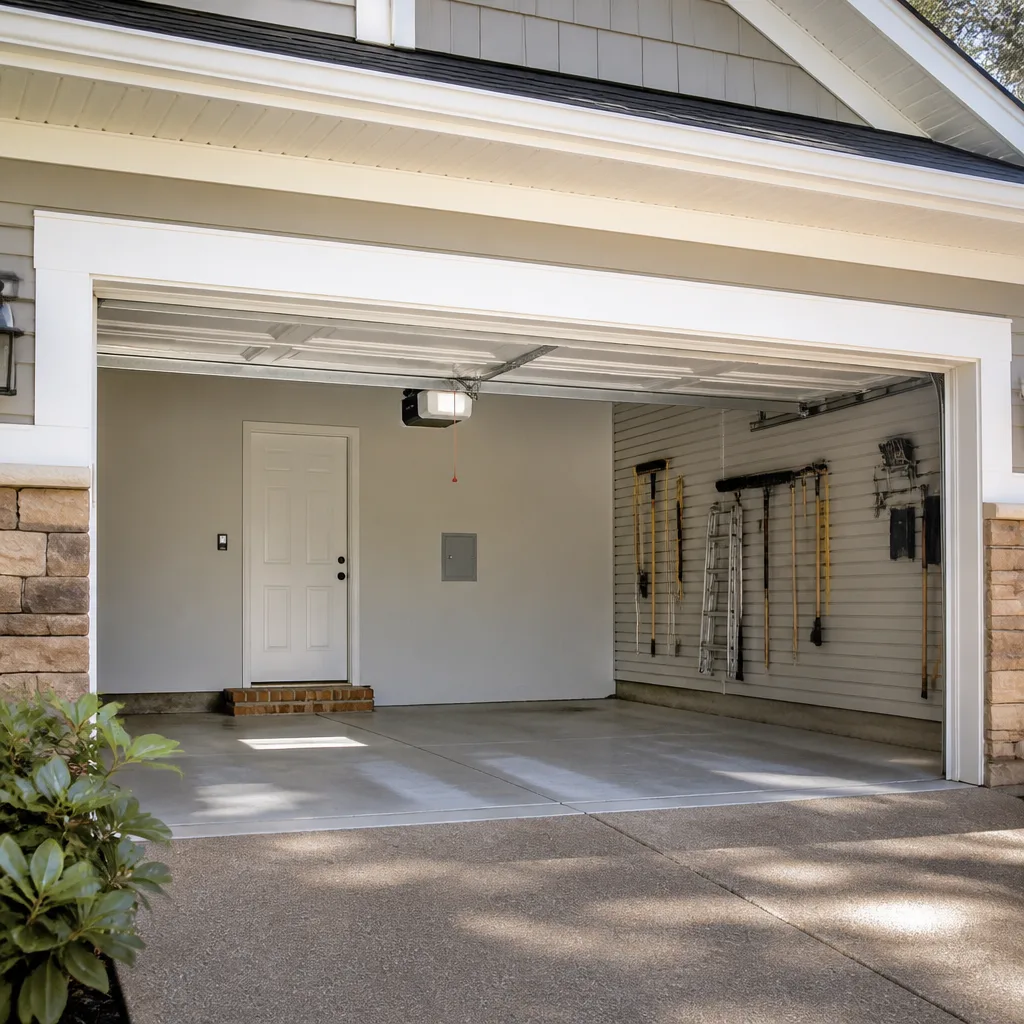 Chamberlain openers
Full 25-point door and opener safety check with every visit - springs, cables, rollers, tracks, and your LiftMaster or Chamberlain opener included
You get a price before we start. It does not change when the pro arrives.
Get your free estimateDIY vs Professional Garage Door: The Eldersburg Homeowner’s Decision Guide
Two garage door jobs look equally doable in a YouTube thumbnail: swapping out a dinged bottom panel, and replacing a torsion spring. One of them can save you a couple hundred dollars and an afternoon. The other stores enough energy to break a wrist or worse, and the video never shows that part. Most DIY-versus-pro debates treat the question like a personality test – are you handy or not? – and that misses the point. The right call depends entirely on the specific task, not your general confidence with tools. This guide breaks the work down task by task, explains the physics that make a torsion spring a different kind of animal, and shows how Eldersburg homeowners can split the work sensibly between what you can safely handle and what genuinely needs a technician.
Quick Answer
Some garage door work is genuinely safe for a homeowner: weatherstripping, lubricating moving parts, aligning safety sensors, and programming a remote are all reasonable DIY tasks. The mechanical-critical components – torsion springs, cables, and full track realignment – require a trained technician because they hold stored energy that can injure you badly if released unexpectedly. The smartest approach for most Eldersburg homeowners is a hybrid: do the low-risk maintenance yourself and bring in a professional for anything that involves springs, cables, or structural track work.
Styles & brands we work with
- Raised-panel steel
- Carriage house
- Modern flush
- Full-view glass
- LiftMaster openers
- Chamberlain openers
Table of Contents
- The Task-by-Task Decision Matrix
- Why Torsion Springs Are a Different Category of Risk
- What’s Genuinely DIY-Safe
- What Requires a Technician
- What DIY Attempts on the Wrong Components Actually Cost
- The Tools-and-Knowledge Threshold for In-Between Jobs
- The Smart Hybrid Approach
- Local Context: What Eldersburg Homes Ask of a Garage Door
The Task-by-Task Decision Matrix
The fastest way to settle the DIY question is to stop thinking about yourself and start thinking about the job. A homeowner who’s comfortable rewiring a light fixture still shouldn’t touch a torsion spring. A homeowner who’s nervous with tools can still replace a bottom seal in twenty minutes. The task sets the risk level.
Here’s how the common garage door jobs sort out:
- Weatherstripping and bottom seals: DIY-safe. No stored energy, low consequence if it’s imperfect.
- Lubricating rollers, hinges, and tracks: DIY-safe. Routine maintenance anyone can do.
- Safety sensor alignment (photo-eye): DIY-safe. A small adjustment that restores a door that won’t close.
- Remote and keypad programming: DIY-safe with the manual, especially on LiftMaster and Chamberlain models with clear instructions.
- Panel replacement on a newer door: Borderline. Doable for a confident homeowner if the panel matches and the frame is sound.
- Panel replacement on an older door: Technician territory. Aged panels and hardware often seize or break during removal.
- Opener repair (internal components): Technician territory. Gear assemblies, logic boards, and limit switches aren’t homeowner jobs.
- Track realignment: Technician territory. A bent or mis-seated track affects door travel and safety.
- Cable replacement: Technician only. Cables carry the same stored tension as springs.
- Torsion or extension spring replacement: Technician only. Non-negotiable.
If you run down that list, a pattern shows up. The jobs at the top of the list involve no stored energy and shut the door on nothing but themselves if you get them wrong. The jobs at the bottom of the list have stored energy, sharp tension, or structural consequences. That’s the dividing line.
Why Torsion Springs Are a Different Category of Risk
A garage door is heavy. A typical single-car door weighs well over a hundred pounds, and a double-car door can weigh two or three times that. The springs are what make it possible for a person to lift that door with one hand or for an opener with a fraction of a horsepower to raise it. When the door is closed, the spring is wound tight and holding all that energy in reserve.
That’s the part people miss. A closed door’s spring is loaded. It’s not sitting there doing nothing. When you see a homeowner on a video casually wind a torsion spring with two bars, what you’re not seeing is that the spring stores enough rotational force to spin a winding bar out of your grip at speed. Professional technicians wear specific gloves and use specific winding bars for exactly this reason, and they know the amount of tension they’re working against before they start.
The physics matter because they explain why springs aren’t a harder version of the same DIY task. Replacing a bottom seal means cutting a rubber strip and sliding it into a channel. Replacing a torsion spring means releasing stored energy you can’t see, in a controlled sequence, on a system you can’t test-close without first getting the tension right. Those aren’t on the same continuum of difficulty. They’re different categories. A miscalculation in the first case means a leaky seal. A miscalculation in the second case means a wound or a broken bone.
In our experience, this is also where DIY attempts turn into garage door spring repair calls the homeowner hadn’t planned for – often because the spring snapped during the attempt, and now the door is stuck closed with no safe way to lift it. Springs on any brand, from Clopay doors to aftermarket parts, deserve the same caution.
What’s Genuinely DIY-Safe
Plenty of garage door maintenance is within reach, and skipping it is what leads to bigger problems later. Eldersburg’s climate alternates between humid summers and cold winters, and that swing works on every moving part in the door system. A little attention in the safe-zone tasks goes a long way.
Here’s where a homeowner can operate with confidence:
- Lubricate every moving joint once or twice a year. Rollers, hinges, and the pivot points need a garage-door-rated lubricant, not WD-40. Do this in late fall before the first hard freeze and again in spring if the door starts squealing.
- Replace the bottom seal when it cracks. A worn bottom seal lets water and cold air into the garage, and in Eldersburg that shows up on the floor near the door in winter. New seals are inexpensive and the job is straightforward.
- Align the safety sensors. If the door reverses or won’t close for no obvious reason, check the two photo-eye sensors near the floor. A cobweb, a bumped bracket, or a sun reflection can trip them. Reposition and re-test.
- Program remotes and keypads. Universal remotes and modern openers from LiftMaster, Chamberlain, and Genie all program from the manual. If one remote stopped working, try reprogramming before assuming the opener failed.
- Test the auto-reverse safety feature. Place a 2×4 flat on the floor in the door’s path and close the door. It should reverse on contact. Do this a few times a year.
None of these require more than basic tools and a step stool. They’re also the tasks that directly extend the life of the door and opener, which is exactly why they’re worth doing yourself.
What Requires a Technician
The other side of the line is where a trained technician isn’t optional. These jobs involve stored energy, high tension, or structural alignment, and a household mistake on any of them can turn a repair into a safety hazard or a full replacement.
Bring in a technician for:
- Torsion and extension spring replacement. Both styles store dangerous energy even when unwound. A professional releases the tension in a controlled way and winds the new spring to the correct count for the door’s weight.
- Cable replacement. Cables run under the spring tension. Cutting one wrong means an uncontrolled snap.
- Track realignment and straightening. The door tracks are the door’s rails, and a bent track affects travel, balance, and safety. Alignment is a precision job.
- Roller or hinge replacement when the system is under load. Some of these are DIY, but not on a door that’s already stressed or unbalanced.
- Opener repair on internal components. Gear assemblies, limit switches, and logic boards are electronics and mechanicals that need diagnosis, not guesswork.
- Panel replacement on older doors. Old panels and hardware seize. What looks like a simple swap becomes a track-and-balance job.
- Full door replacement. When the frame, panels, and opener are all showing wear, replacing the door is often smarter than chasing repairs. This is Garage Door Repair Eldersburg territory, and it’s the point where a free measurement and written quote matter more than a DIY run to a big-box store.
For the spring and opener work in particular, a specialist is worth the call. Opening a stuck door with a snapped spring can also bend the tracks, which turns a spring job into a spring-plus-track job. Leave the door closed until a technician can look at it.
What DIY Attempts on the Wrong Components Actually Cost
The reason so many homeowners end up calling us isn’t that the DIY attempt failed – it’s what happens when a failed attempt takes other parts with it. The damage from a bad spring or cable job is rarely confined to the spring or cable.
Here’s what a miscalculated DIY attempt typically costs beyond the original repair:
- Additional damage to surrounding components. A snapped spring can whip a cable, break a drum, or bend a track. What was a spring job turns into a spring-plus-cable-plus-track job.
- Emergency call pricing. A failed DIY attempt on the wrong component usually leaves the door stuck closed, which turns a scheduled repair into an urgent call. That’s a bigger, less convenient day than the original task.
- Voided warranty on newer doors and openers. If your door is under a manufacturer warranty, DIY work on the mechanical-critical components can void it. That’s often where the real dollar loss lands.
- Loss of the diagnostic advantage. When a technician can see the system before any hands are on it, they can tell you whether the spring alone needs replacing or whether the opener is also on its way out. That assessment is lost when you’ve already started pulling parts.
The pattern is consistent. The job that looked like $200 of DIY work and a Saturday ends up being a bigger repair at a worse time, sometimes with a warranty the homeowner doesn’t have anymore. If you’ve already started a job and things are moving in the wrong direction – spring, cable, tension, or track – stop and call. Call (877) 704-0356. We answer 24/7. Fast dispatch from 7am to 7pm, Sunday through Friday. The price is quoted and agreed before any work starts, so there’s no surprise waiting at the end.
The Tools-and-Knowledge Threshold for In-Between Jobs
Some jobs sit between “obviously fine” and “obviously not.” Replacing a single panel on a newer door, swapping a roller on a balanced door, or replacing a hinge on a door in good shape can be done by a confident homeowner with the right tools. But the qualifier there is with the right tools and on a door in good shape. Those are the two conditions.
The tool threshold for in-between work is higher than people expect:
- A proper ladder rated for your weight and set on a level surface. Garage floors are usually sloped toward the door, so a ladder set up without checking the slope is a fall risk before any work even starts.
- Hand tools in good condition, not stripped or rounded. A seized bolt on an older door often needs penetrating oil and patience. A slipped wrench on a loaded hinge is a knuckle injury.
- A second person to spot the door. Doors are heavy. Panel and hinge work on a door that’s at full height is not a solo job.
- Knowledge of how your specific door is balanced. Doors use torsion springs or extension springs; the two styles have different balance points. A door that’s out of balance won’t behave the way the manual expects, and a homeowner who doesn’t know that can drop a panel onto the other side.
If you have all four – ladder, tools, a spotter, and knowledge of your door system – the in-between jobs are genuinely reasonable. If you’re missing one, the honest answer is to schedule the work with a professional. Knowing which side of that line you’re on is the whole skill.
For tasks that involve opener electronics, the line gets simpler. Modern systems like the Chamberlain and LiftMaster myQ ecosystem, or Genie Aladdin Connect, have specific wiring and pairing procedures, and the diagnosis behind a failing opener is often a logic board or a worn gear that looks like a programming problem. That’s garage door opener repair territory, and it’s the kind of diagnosis a technician can make in minutes.
The Smart Hybrid Approach
Most Eldersburg homeowners don’t need to pick a side. They need a routine, and the routine is split: you handle the safe tasks, a professional handles the mechanical-critical ones, and everyone’s clear on where the line is.
Here’s what that looks like as a season-by-season plan:
- Fall, before the first cold snap: Lubricate all moving parts yourself. Test the auto-reverse. Inspect the bottom seal for cracks. If anything in the door’s lift feels uneven, note it and schedule a professional inspection rather than adjusting springs.
- Early winter: If the door starts opening with a jolt, stopping mid-travel, or making a pinging sound, call for a diagnostic. Those are signs the spring is on the way out, and waiting is a bad gamble.
- Spring, after the freeze-thaw cycle: Re-lubricate. Replace a cracked bottom seal. Check the sensors for debris or misalignment. Test the remote and keypad on the openers you use most.
- Summer, when the heat hits: Doors in Eldersburg garages that face west take the brunt of summer heat. If the door is slow, noisy, or the opener strains, that’s a diagnostic call, not a DIY project.
- Whenever a spring, cable, or track issue appears: That’s a professional job, every time. No exceptions, no “maybe I can manage it.”
- When the door is over a decade old and showing wear: Get a free measurement and written quote for a replacement before chasing another round of repairs. The math on repair versus replace is often closer than it looks, and a professional can tell you which is the better spend on your specific door.
The hybrid approach isn’t a compromise. It’s using the right level of expertise on the right component. That’s what the trade does internally, too. The safety-critical elements come off the homeowner’s plate and go to the person with the training, the tools, and the experience.
Local Context: What Eldersburg Homes Ask of a Garage Door
Eldersburg’s climate isn’t extreme by Maryland standards, but the swing between a humid summer and a cold winter is real, and it works on every moving part of a garage door. The freeze-thaw cycle tightens rollers and hinges, the wet spring swells wood trim and warps old panels, and the summer heat ages seals and lubricants. A door that gets a little annual attention in Eldersburg avoids most of the wear that leads to repair calls.
The housing mix matters too. There are older homes in the area with doors and openers that have been in service for a while, and there are newer builds with modern LiftMaster or Chamberlain systems that have more electronics and more connectivity. Both are worth understanding before you decide what you’ll do yourself. Older doors often have seized hardware that turns a simple panel swap into a track job. Newer doors have opener logic boards and pairing procedures that need the right diagnosis when something goes wrong.
Eldersburg garage doors also serve as the primary entry point for a lot of homes. When the door stops, the household routine stops with it. That’s the real reason so many homeowners in Eldersburg end up calling for a diagnostic on a task that looked like it could wait: the door is too central to leave stuck for a week while a DIY attempt sort-of works.
A lot of the repair work we see in Eldersburg comes from a mix of wear and small mistakes. Some of it is simple – a sensor bar full of pollen, a remote that needs reprogramming, a bottom seal that’s given up. Some of it is the result of a homeowner who tried a mechanical-critical task without the right tools. Garage door repair in Eldersburg often starts with listening to what a homeowner has already tried.
Common Mistakes to Avoid
- Treating torsion springs like a harder version of a hinge job. They’re a completely different category of risk. There’s no safe shortcut for a homeowner winding a torsion spring without proper bars and training, and the physics of stored energy doesn’t negotiate.
- Cutting a cable “to loosen it.” Garage door cables are under load from the spring. A cut cable snaps with force. Never cut one as a DIY step; it’s not a removal technique.
- Adjusting the spring tension to fix a balance problem. If the door is uneven, the likely cause is a worn spring or a track issue, not a tension setting. Adjusting spring tension by feel risks over-winding.
- Testing the door repeatedly after a spring breaks. Every attempt to open a door with a broken spring adds stress to the opener and tracks. Leave it closed and call for dispatch.
- Using the wrong lubricant. WD-40 isn’t a substitute for garage-door lubricant. It thins the correct grease out and attracts debris. Use the right product once or twice a year.
- Pulling a panel without checking the door’s balance. Older doors often have seized hinges and drums. Pulling a panel with a loaded system can drop the other side. If the door isn’t moving smoothly before you start, don’t start.
- Ignoring a warranty before starting a DIY repair. Newer doors and openers from Clopay, LiftMaster, and other brands carry warranties that can be voided by DIY work on the mechanical components. Check the warranty first, not last.
See the difference
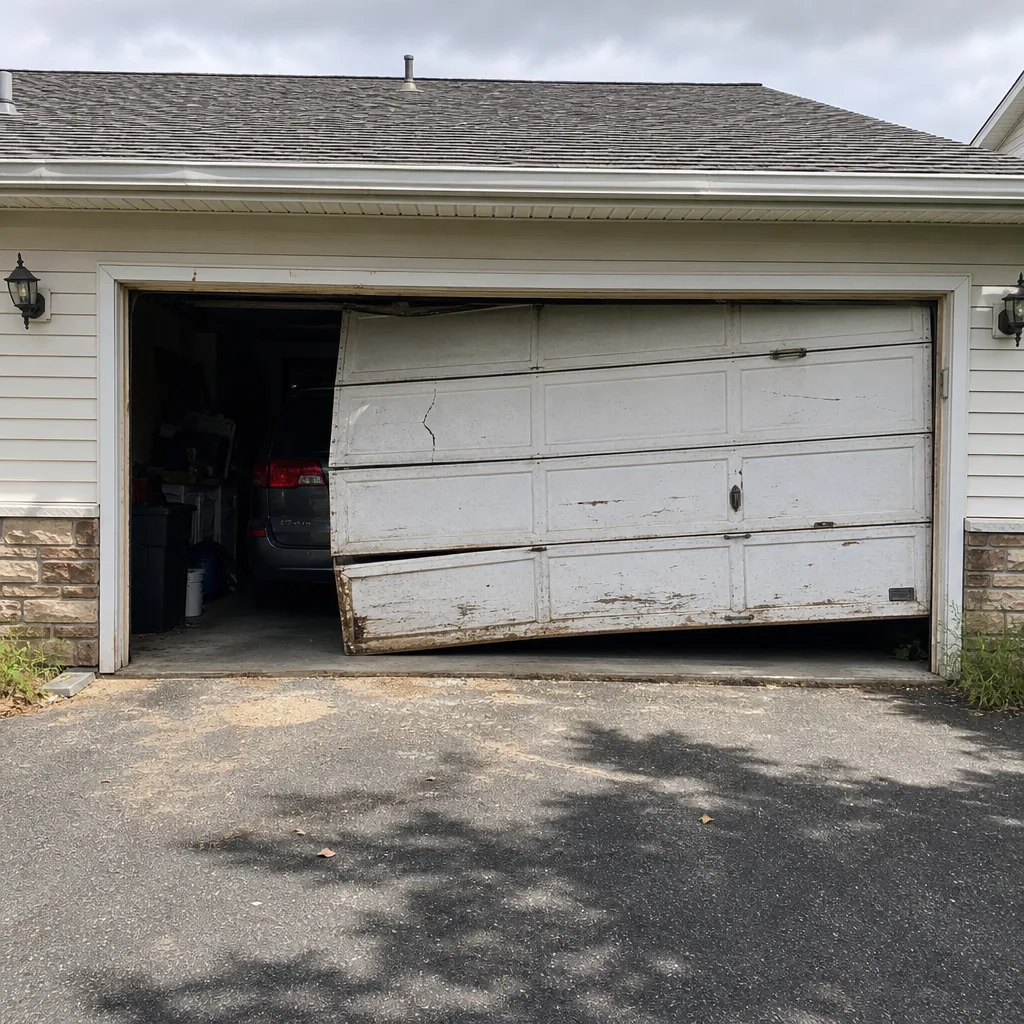 Before
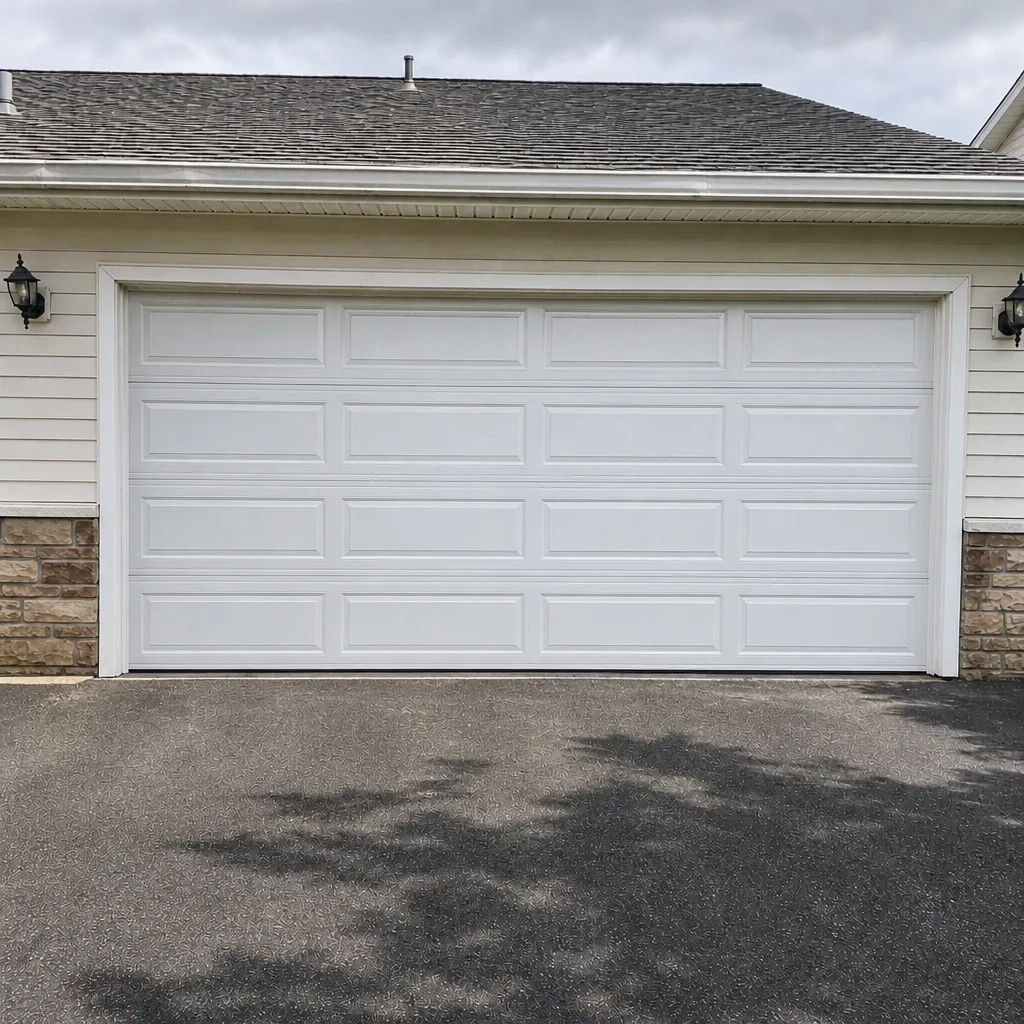 After
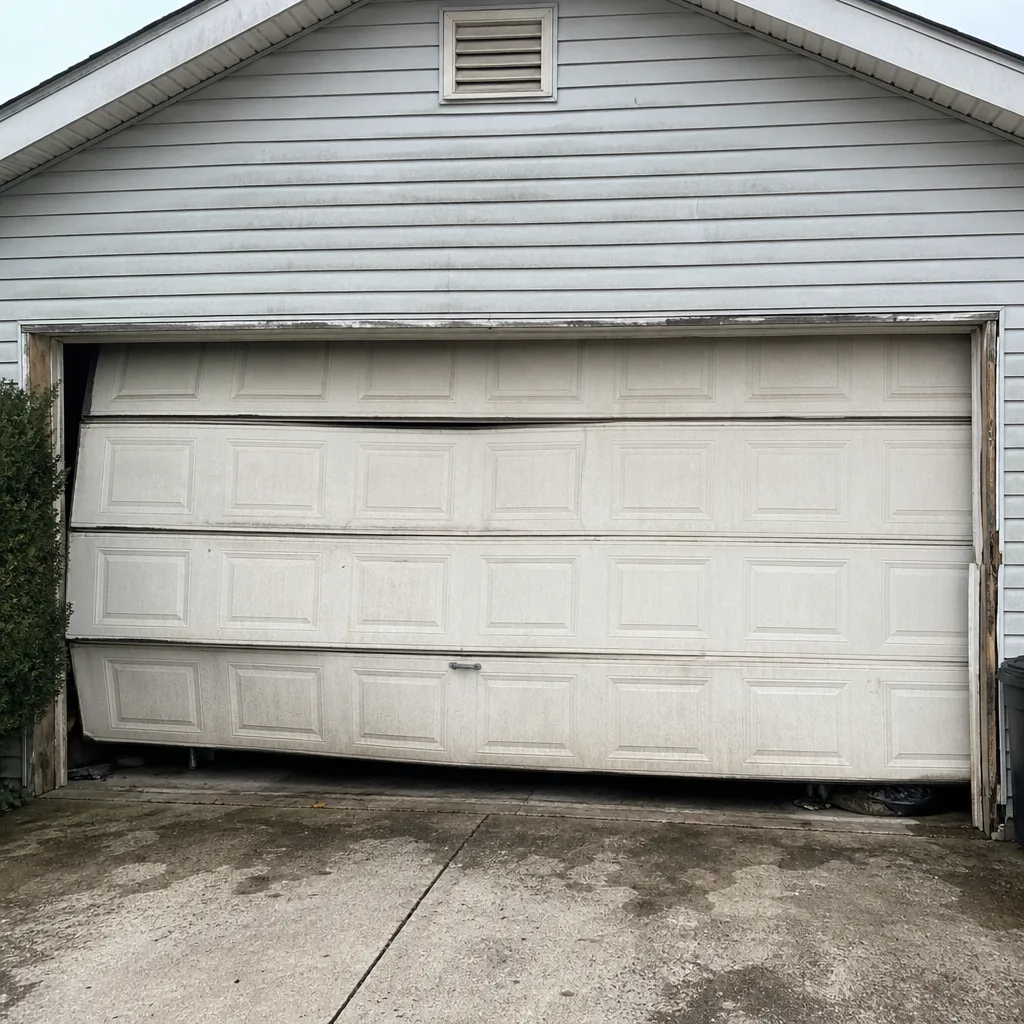 Before
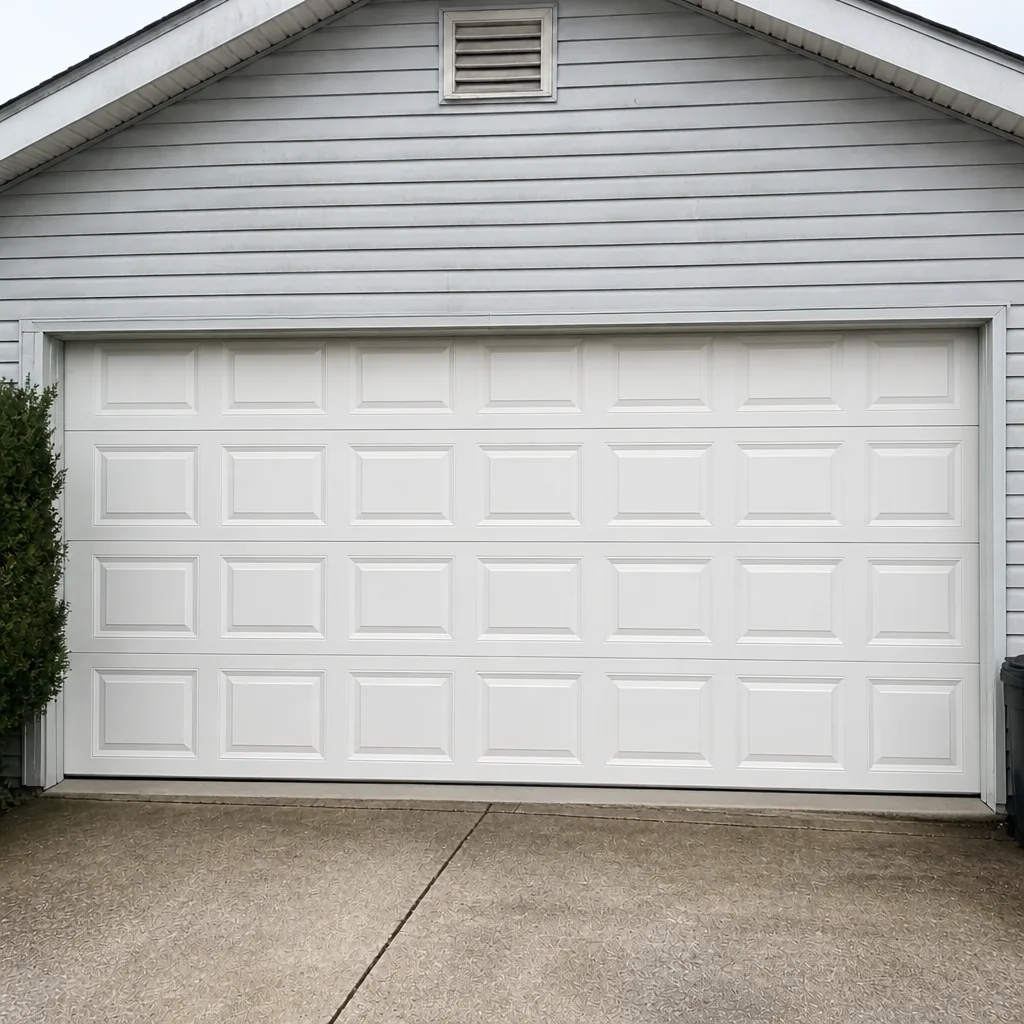 After
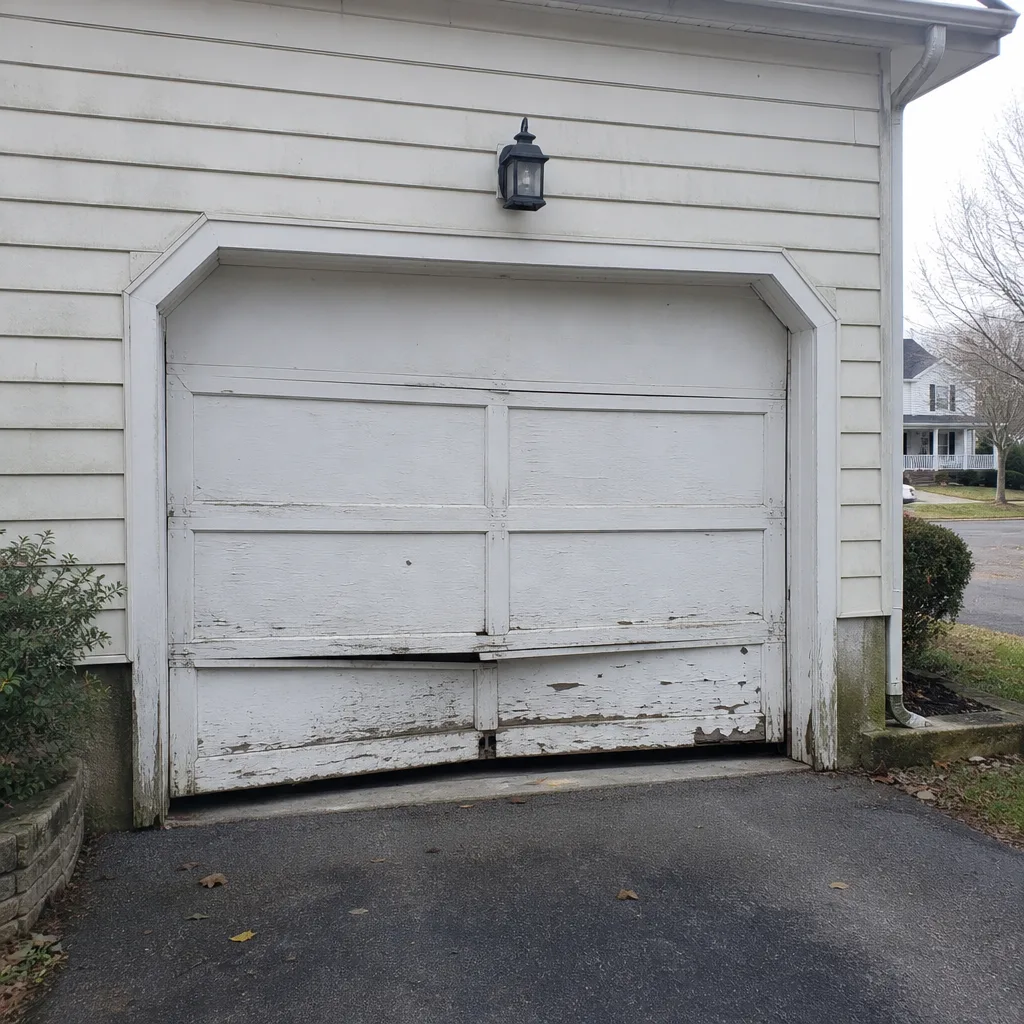 Before
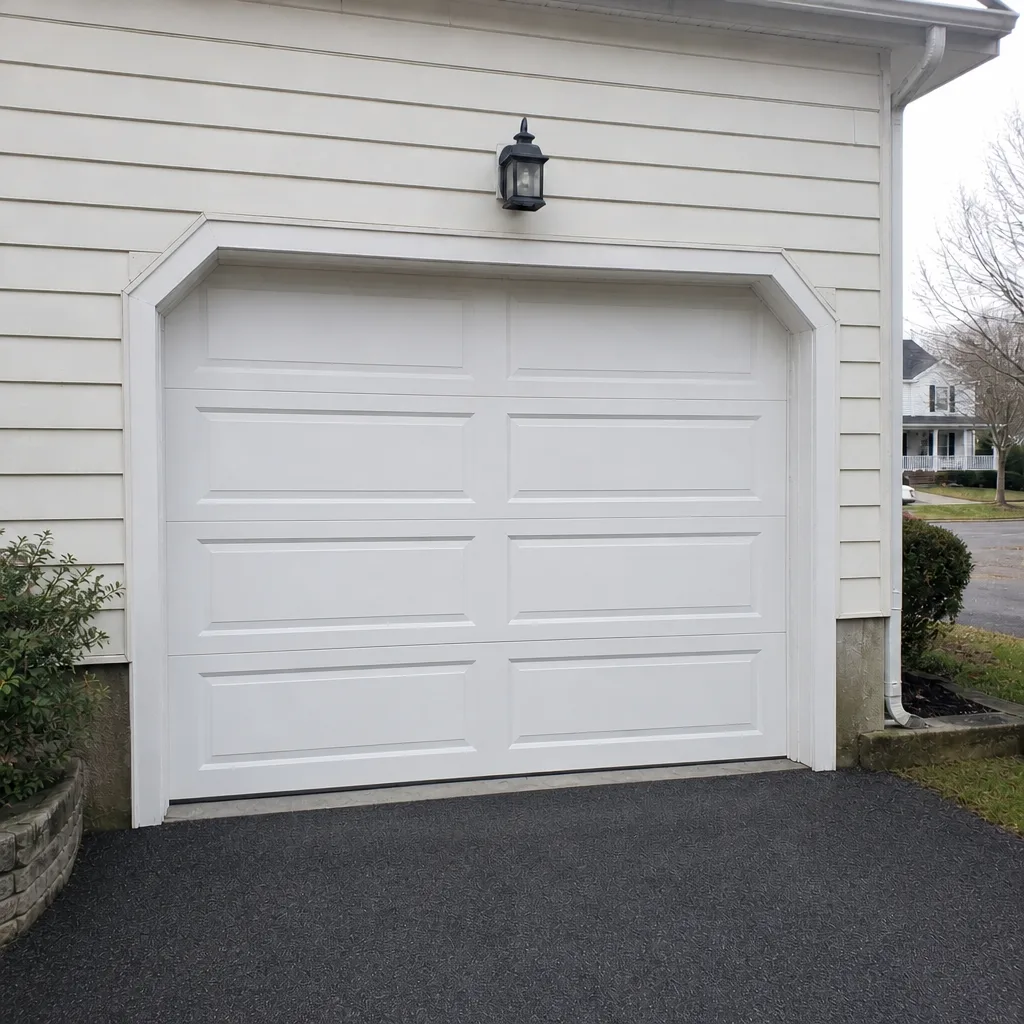 After
When to Call a Professional
Call a professional for any job that involves a spring, a cable, or a track that’s bent or mis-seated. Call when the door won’t balance, won’t open more than a foot, or reverses immediately for no obvious reason. Call when the opener clicks but doesn’t move, or moves but stops partway. Call when an older door’s panel needs replacing and the hinge hardware looks seized. Call when the door is more than a decade old and starting to show wear, so someone can tell you honestly whether repair or replacement is the better spend. And call for the situations that turn into a household problem – a door stuck open at the end of the day, a door stuck closed with a car inside, a door that won’t secure. Garage Door Repair Eldersburg offers free estimates in Eldersburg. Call (877) 704-0356. We answer 24/7. Fast dispatch from 7am to 7pm, Sunday through Friday. The price is quoted and agreed before any work starts.
We work on the brands homeowners already have – LiftMaster, Chamberlain, Genie, Clopay, Amarr, Wayne Dalton, Craftsman, and Raynor – so you’re not steered toward a replacement brand just because a technician doesn’t know yours. Our technicians have up to 9 years of experience. If you’ve started a DIY repair and gotten in over your head, tell us what you’ve tried, and we’ll pick up from there.
Frequently Asked Questions
No. Torsion and extension springs store enough energy to cause serious injury when released unexpectedly, and a homeowner without professional bars, gloves, and training is working against a system they can’t safely control. The correct call is a technician, every time. If a spring is broken and the door is stuck, leave the door closed and call (877) 704-0356. We answer 24/7, with fast dispatch from 7am to 7pm, Sunday through Friday.
Weatherstripping and bottom seals, lubrication of rollers and hinges, safety sensor alignment, and remote or keypad programming are all genuinely safe DIY tasks. They involve no stored energy and no risk of structural consequences if done imperfectly. Panel replacement on a newer door with sound hardware is often doable, and anything involving springs, cables, or track realignment is not. Call (877) 704-0356 for an exact quote on the jobs beyond the safe zone – estimates are free.
It can. Manufacturer warranties from brands like Clopay or LiftMaster often specify that work on the mechanical components must be done by a qualified technician, and a DIY repair on a spring or opener can void coverage on the part you’ve worked on. Check the warranty terms before you start, not after. If you’re not sure, call (877) 704-0356 for a free estimate and let a technician handle the part that carries the risk.
The price is set per job by a written estimate, so the number depends on what’s actually broken and which parts need replacing. What we can promise is the process: the price is quoted and agreed before any work starts, and the written estimate sets the final price. Call (877) 704-0356 for an exact quote – estimates are free.
Sometimes, yes. Before calling, check the sensors for debris or a reflection, test the auto-reverse, and check that the opener’s manual release isn’t engaged. If the door still won’t close or reverses immediately, that’s a diagnostic call, not a DIY job – it can be a sensor, a limit switch, or a worn gear, and each one has a different fix. Call (877) 704-0356. We answer 24/7 and can dispatch fast from 7am to 7pm, Sunday through Friday.
It depends on what’s actually failing. A door with good panels and a healthy opener is usually worth repairing, especially when the fix is a spring, cable, or roller. A door with seized hardware, a failing opener, and panel damage on both sides is often better replaced, since the total repair bill can approach the cost of a new door. A free measurement and written quote will tell you which one wins on your door. Call (877) 704-0356 to schedule one.
The Bottom Line
The DIY-versus-professional question for a garage door isn’t about whether you’re handy. It’s about whether the specific task involves stored energy. Weatherstripping, lubrication, sensor alignment, and remote programming are safe to handle yourself and worth doing. Springs, cables, and track realignment aren’t a harder version of the same job – they’re a different category, because the energy in a wound spring can injure you badly if the process goes wrong. A smart hybrid is the answer for most Eldersburg homeowners: do the routine maintenance, monitor the door’s behavior, and hand off the mechanical-critical work to a professional. When you do call, the written estimate sets the price, and it’s agreed before any work starts. Call (877) 704-0356 for a free estimate.
Written by the team at Garage Door Repair Eldersburg.